Warsaw

Warsaw, the capital of Poland, was one of the first cities occupied by the Nazis. The Jews were forced to move into the poor area of town, which was sealed off and connected to the city by only a bridge. This ghetto became the largest in the General Government, containing almost a half million people. When the Nazis started to liquidate the ghetto, the Jews revolted, and the resulting Warsaw Rebellion ultimately led to the complete and utter destruction of the ghetto.
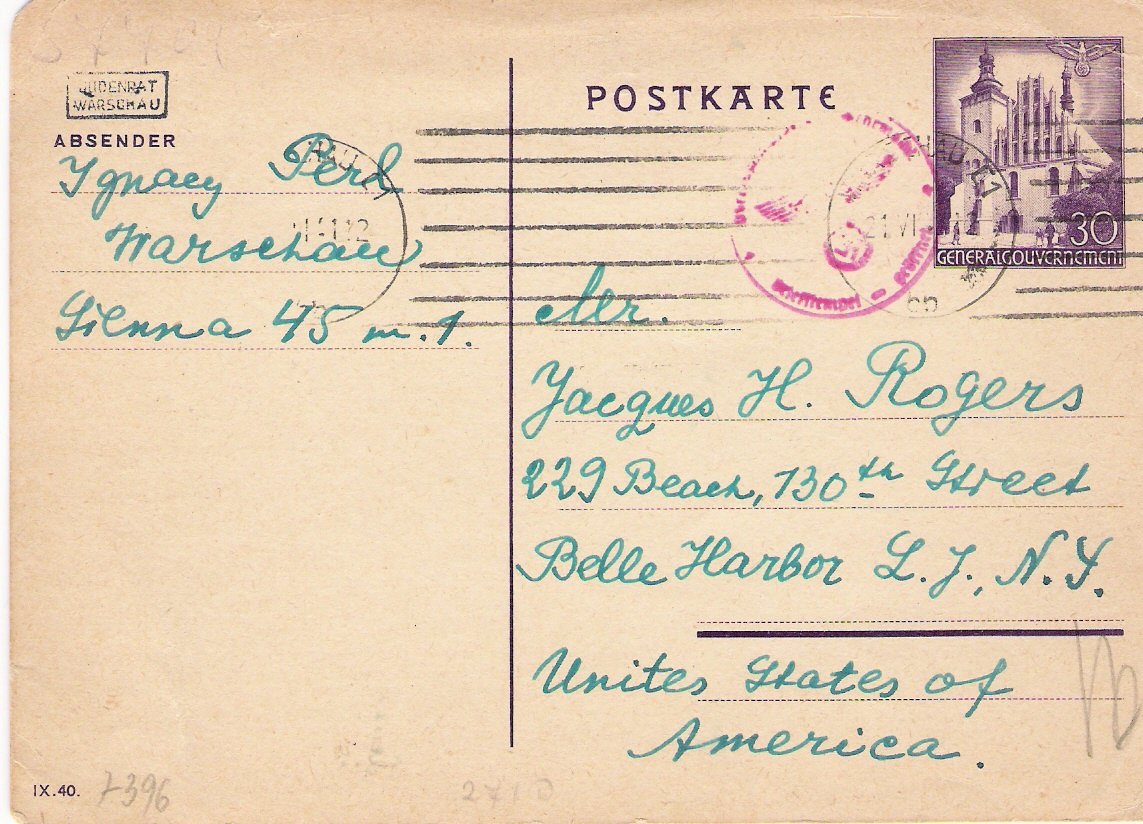
This postal card, sent from the Warsaw ghetto, has a machine Warsaw, June 21, 1942, cancel to Belle Harbor, NY. It was censored by the Nazis, as shown by the circular red handstamp. The small rectangular box in the left corner is the ghetto postal censor.
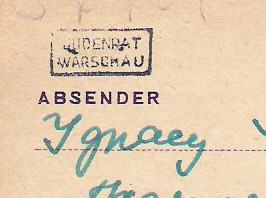
This is the handstamp of the Warsaw ghetto. It reads Judenrat Waschau (Warsaw Jewish Council).
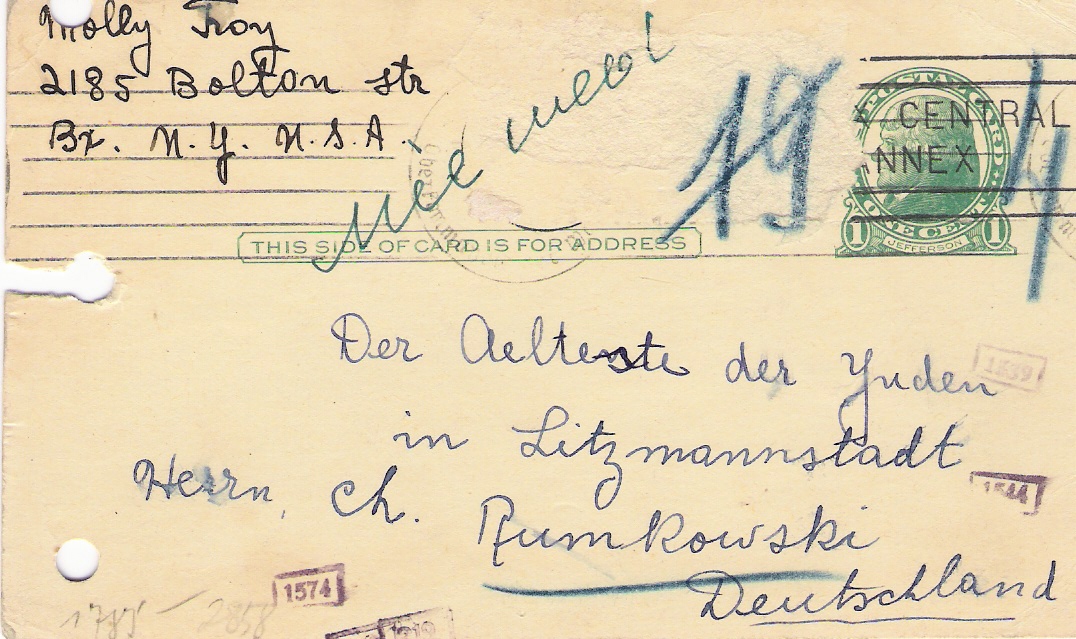
This postal card was sent from the Bronx, NY, to the Aelteste der Juden Chaim Rumkowski. It is an inquiry card, looking for residents of the town. Three holes were punched on the left side, and the card was placed in a loose-leaf binder.

The post office in the Warsaw ghetto was run by the Judenrat government, but the money it derived from the sale of postal items went to the main post office in Warsaw. In order for the ghetto post office to pay the workers, a surtax was applied to the mail that was delivered to the residents of the ghetto.  

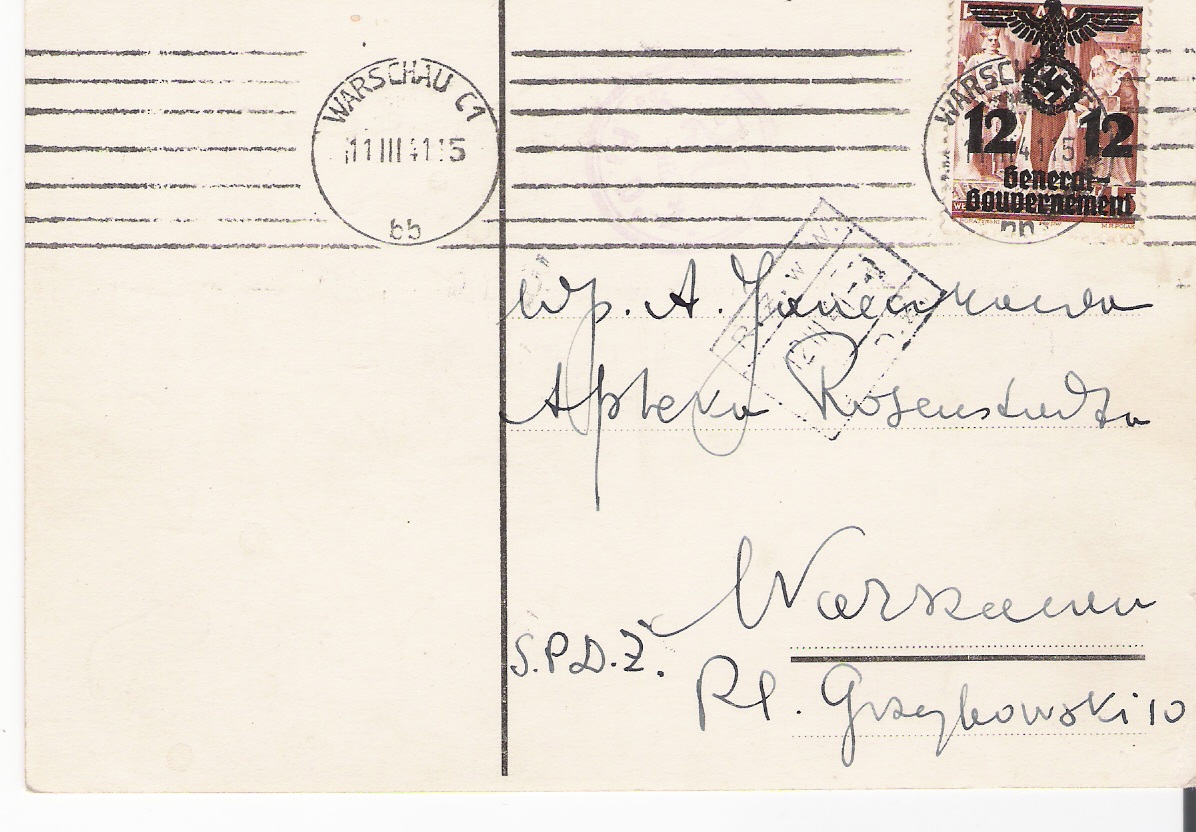
This postcard was sent to the Warsaw ghetto. It has a machine cancel March 11, 1941, with the ghetto receiving handstamp and the circular surtax marking.

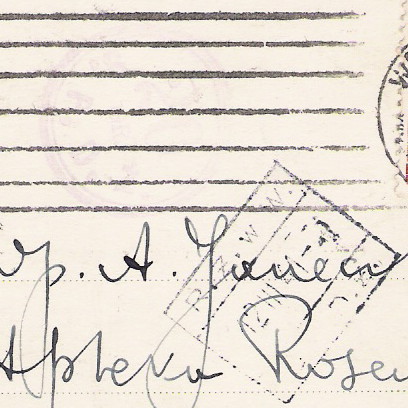
This image shows the markings enlarged: the circular surtax stamp barely visible at the top left and the rectangular ghetto receiving handstamp at the bottom right.


Back Next

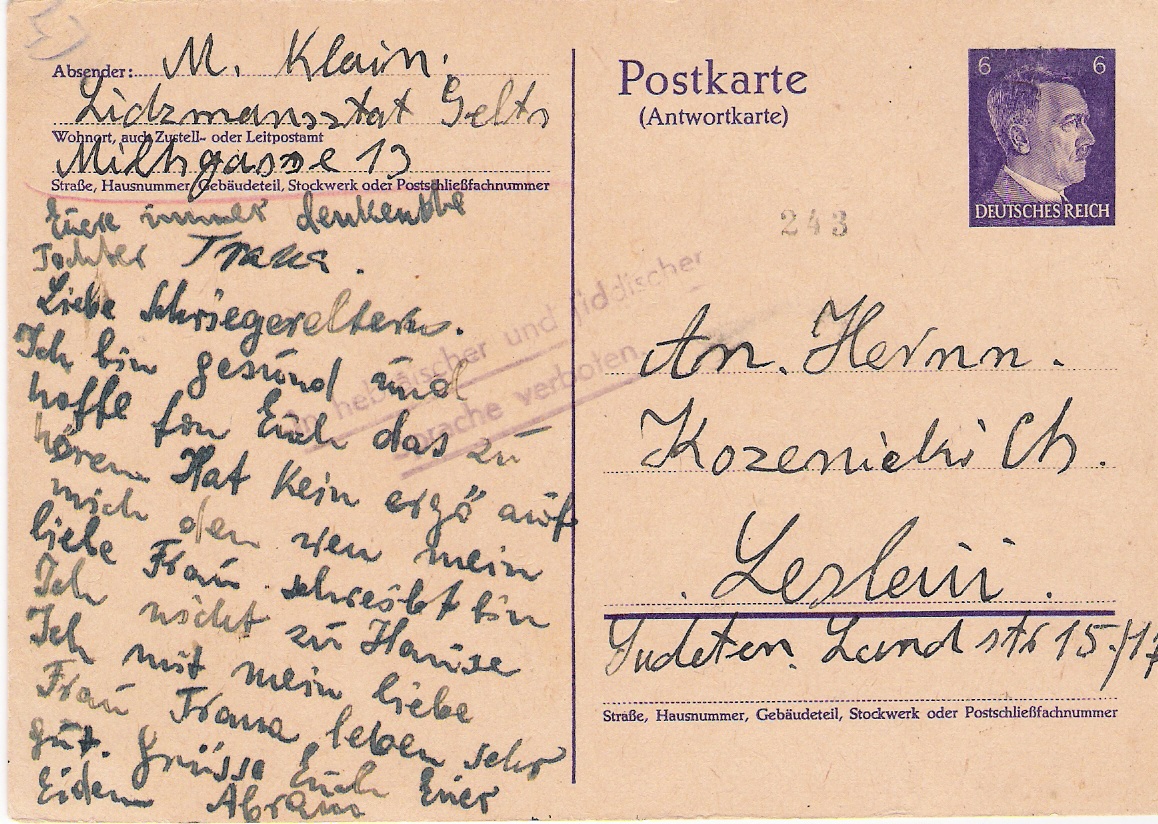
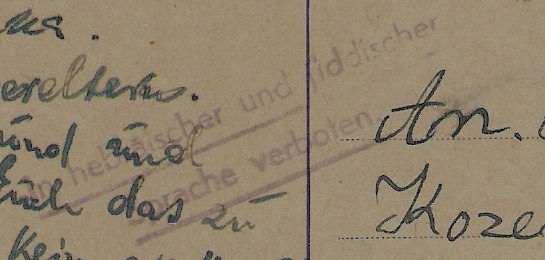
This postal card was returned to the sender with a stamp indicating that the card should not be written in Hebrew or Yiddish, but only German.


Back Next