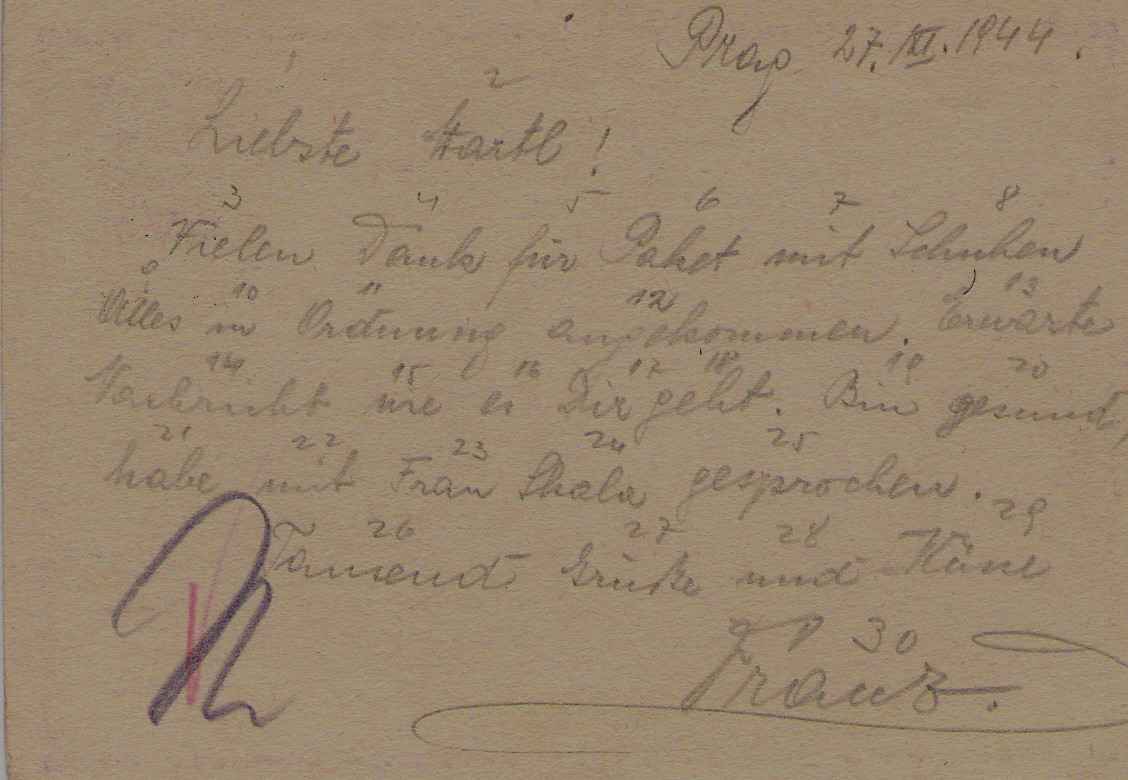
I turned over the card and found a written message containing 30 words, each having a number above it, and the censor’s initials.


Back Next

Wittenberge

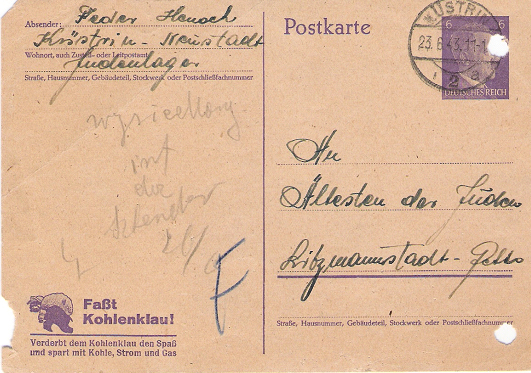
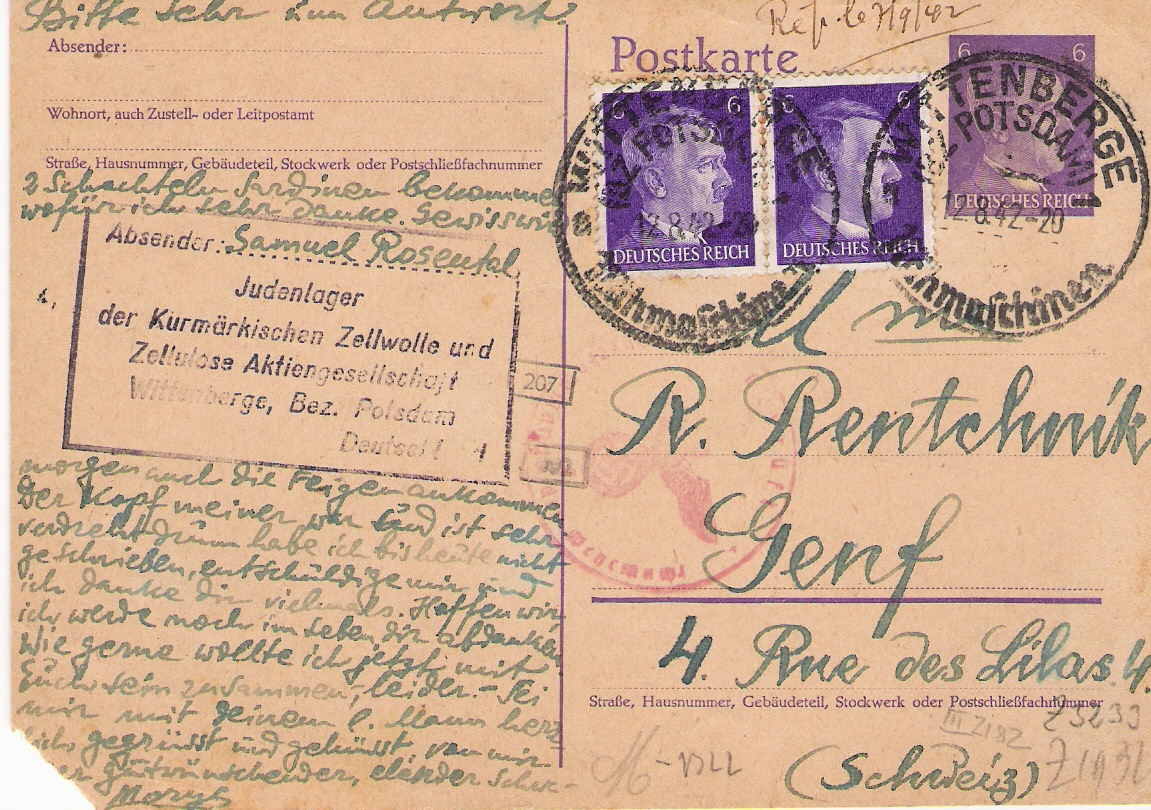
Kumärkische Zellwolle und Zellulose Aktiongesellschaft was company factory, a Judenlager (Jewish work camp) that specialized in making rayon and cellulose. It was located in Wittenberge, Germany. This subcamp of Neuengamme opened in August 1942 and closed in February 1945.

This spectacular cover has a handstamped return address that includes the word Judenlager. It was canceled on August 12, 1942, in Wittenberge. A cancel reads “Wittenberge IBZ Potsdam, Sewing machine.” The card is addressed to Samuel Rosenthal’s in-laws who lived in Geneva, Switzerland. He is pleading with them to do something to get him out. Married before the war, he had been separated from his wife and child.

Back Next

Jewish Work Camps

The Nazis set up a system of concentration camps that encompassed the whole Reich. In Germany and each of the occupied countries, they set up an extensive system of camps and subcamps. The structure of the camp system comprised 16 basic or main camps and hundreds of subcamps that fit into a variety of categories. One such category of subcamps was the Judenarbeitslager (Jewish work camp).

The Judenarbeitslager utilized Jews as slave laborers. The work consisted largely of manual labor, but sometimes their skills were put to use to produce a product or clothing. Most of the time they were worked to death.

Berlin Cancellation

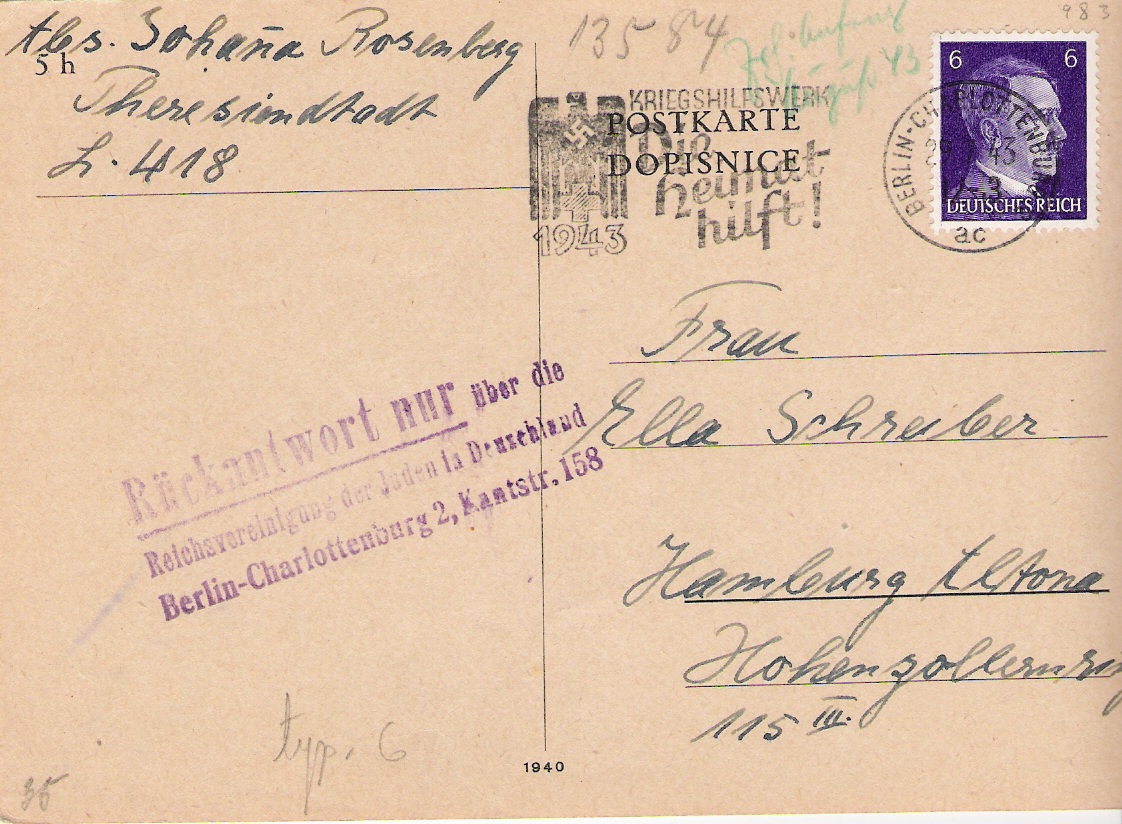
The mail from Theresienstadt was collected in a central office and shipped to the Jewish councils in either Prague or Berlin to be posted and distributed. It appears that Jewish mail going out of Theresienstadt did not receive a cancel from that city, only from Berlin or Prague.

This post card was sent from a Theresienstadt address. It was transported to Berlin and canceled with a Berlin circular July 29, 1943. A handstamp from the Jewish Council of Berlin was placed on the card, which was then sent on to Hamburg.

Eichenwald

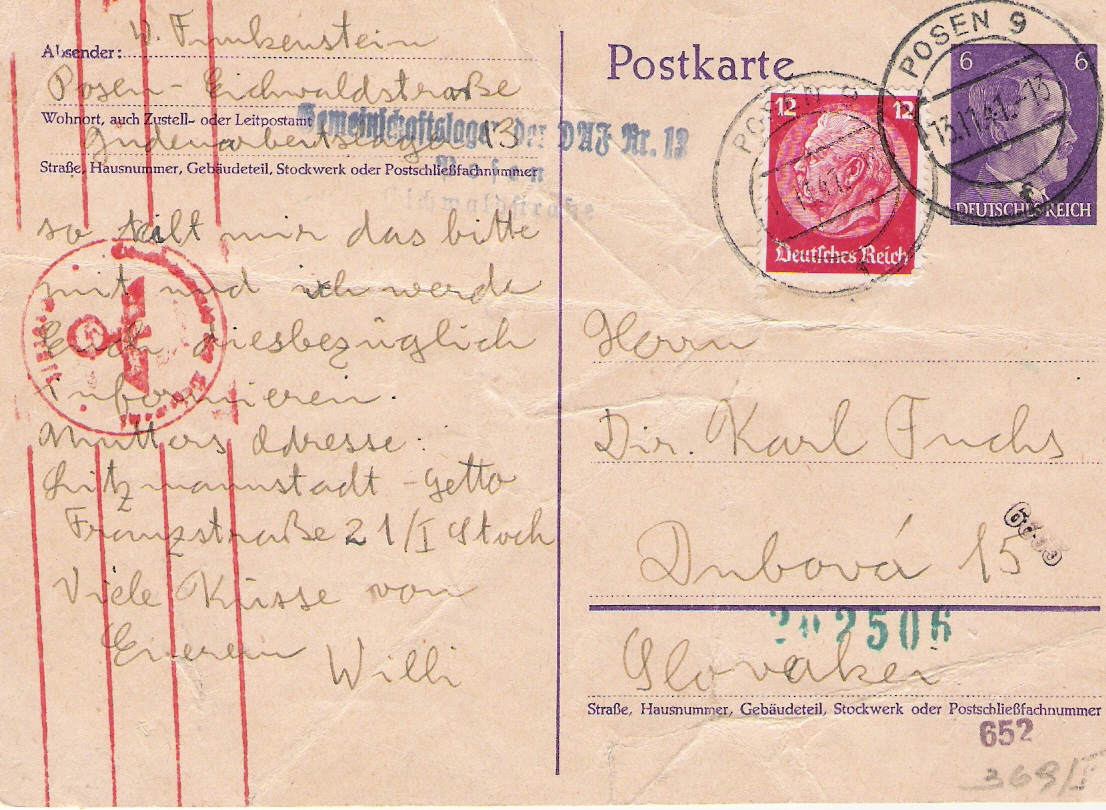
Eichenwald was located in the Polish occupied territory near Posen. Established in July 1941, it served several companies, including Phillipp Holzmann, Katz, and Sager & Wörner. The camp closed August of 1943.

This postal card has an additional 12-pfg stamp. It was sent to Dubova and was censored through the Vienna office of the OKW. The third line of the return address indicates the Judenarbeitslager.


Back Next

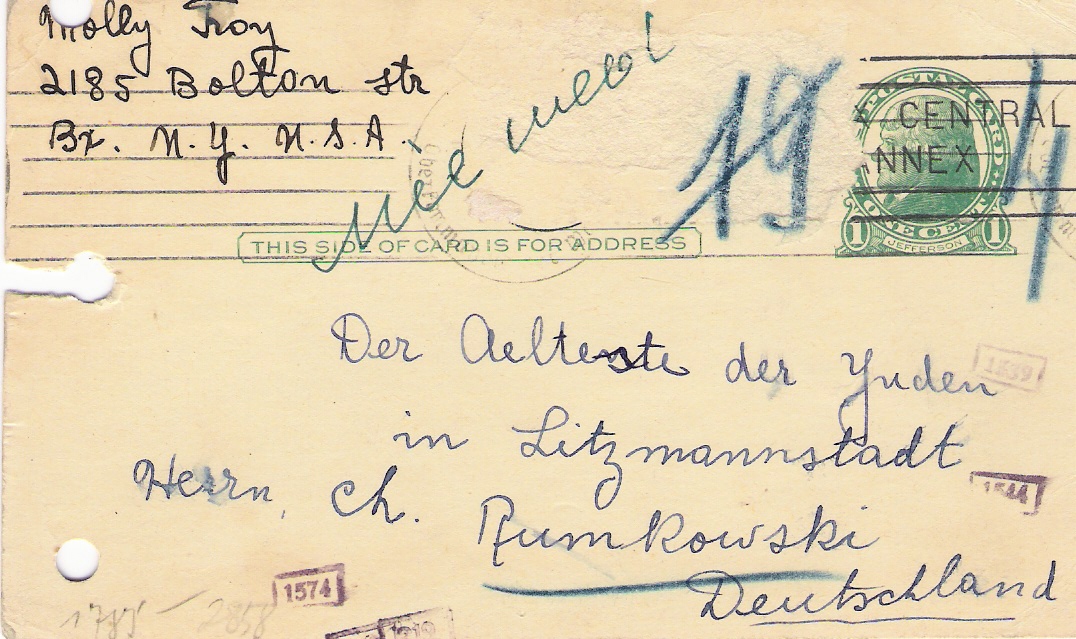
This postal card was sent from the Bronx, NY, to the Aelteste der Juden Chaim Rumkowski. It is an inquiry card, looking for residents of the town. Three holes were punched on the left side, and the card was placed in a loose-leaf binder.

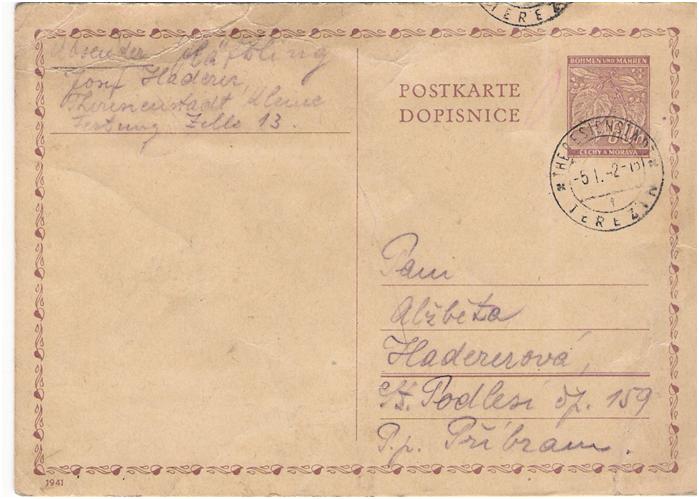
This letter was addressed to a prisoner detained in the Kleine Festung and was returned to sender.

It has a circular date stamp July 13, 1942, and a handstamped Return to sender.


Back Next

Prague Cancellation

This postcard was sent from Theresienstadt and is marked with the handstamp of the Prague Jewish Committee and an 11b routing mark. It is has a circular Prague cancel, March 15, 1945. The card was sent to a special work camp (Sonderlager).

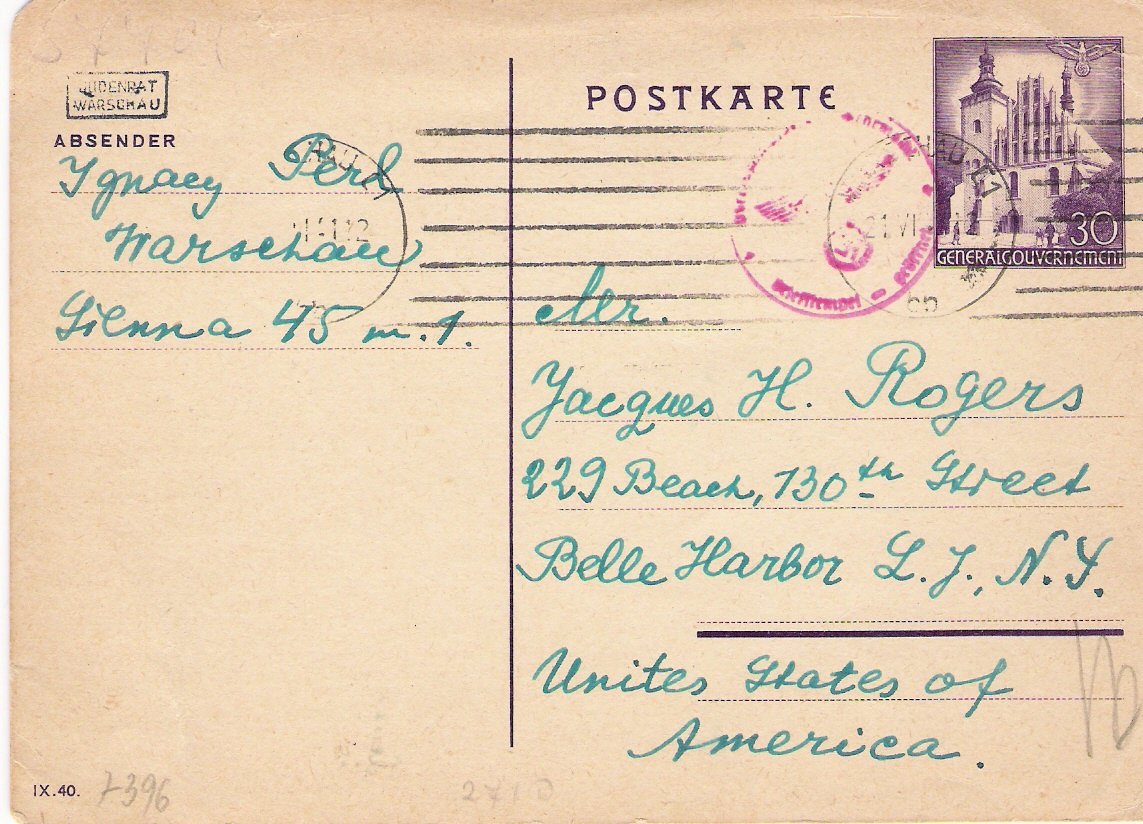
The post office in the Warsaw ghetto was run by the Judenrat government, but the money it derived from the sale of postal items went to the main post office in Warsaw. In order for the ghetto post office to pay the workers, a surtax was applied to the mail that was delivered to the residents of the ghetto.  

This postcard was sent to the Warsaw ghetto. It has a machine cancel March 11, 1941, with the ghetto receiving handstamp and the circular surtax marking.

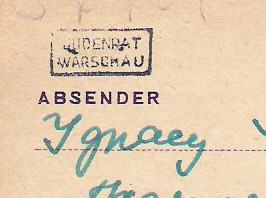
This image shows the markings enlarged: the circular surtax stamp barely visible at the top left and the rectangular ghetto receiving handstamp at the bottom right.


Back Next

Auschwitz

Auschwitz is one of the most notorious concentration camps established by the Nazis during the Second World War. The name of the camp alone is synonymous with genocide and extermination. Auschwitz was located near the town of Oswiecim, Poland, and it grew into a vast complex of three main camps and over 70 subcamps.

From the camp’s beginnings in May 1940 until January 1945, when most surviving Auschwitz prisoners were marched off by their German captors and Soviet troops liberated the camp, approximately 405,000 prisoners of both sexes, from nearly all European countries were registered, assigned serial numbers, and incarcerated there. Only a fraction of the 2.5 million people who passed the gates survived the camp.